W. S. Merwin
W. S. Merwin stands as one of American literature’s most restlessly inventive voices, a poet whose career spans seven decades of formal innovation and deepening ecological consciousness. Beginning as a formalist working in the shadow of earlier modernists, Merwin gradually shed traditional constraints to develop a distinctive style marked by sparse, urgently paced lines and an almost prophetic attention to language stripped of punctuation. His work moved steadily inward and outward simultaneously—inward toward the self’s dissolution, outward toward the natural world as both subject and moral imperative—making him a crucial figure for environmentally conscious poetry long before such concerns became fashionable in literary circles.
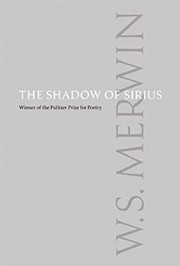
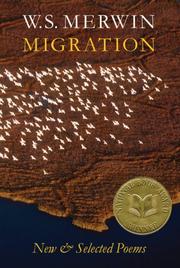
The arc of Merwin’s recognition reflects the steady deepening of his vision over time. His 2005 National Book Award for Migration: New and Selected Poems acknowledged a lifetime of groundbreaking work, while his 2009 Pulitzer Prize for Poetry for The Shadow of Sirius demonstrated his undiminished creative power well into his eighties. That latter collection, composed largely in his adopted home of Hawaii, represents perhaps the culmination of his lifelong project: poems that dissolve the boundary between self and world, past and present, human voice and the silence from which language emerges. For readers following contemporary American poetry, Merwin’s dual major-award recognition marks him as an essential figure whose influence extends far beyond those who directly studied his work.