Walter M. Miller
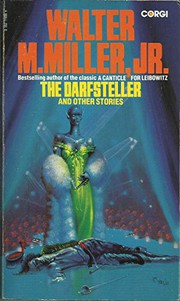
Walter M. Miller Jr. stands as one of science fiction’s most intellectually ambitious voices, a writer whose relatively modest output belies his outsized influence on the genre. His career reached its zenith with two Hugo Award victories that bookended the 1950s and early 1960s—first with the acclaimed novelette “The Darfsteller” in 1955, which explored the collision between human artistry and mechanical reproduction, and then with his masterwork A Canticle for Leibowitz in 1961. The latter, a sprawling post-apocalyptic epic that traces human civilization across centuries following nuclear devastation, remains one of the most studied and celebrated science fiction novels ever written, demonstrating Miller’s ability to blend rigorous theological and philosophical inquiry with gripping narrative momentum.
What makes Miller’s dual Hugo recognition particularly significant is how it captures the full range of his literary project: the novelette win showcased his gift for compact, idea-driven storytelling, while the novel award validated his capacity for sustained, mythic scope. A Canticle for Leibowitz in particular became the prototype for serious science fiction that takes religion, knowledge, and the cyclical nature of human folly as central concerns. Miller’s prose style married genre conventions with literary sophistication, and his recurring preoccupations with technology’s moral implications, the preservation of culture, and humanity’s capacity for self-destruction have resonated across decades, cementing his status as one of science fiction’s essential voices.