William Bronk
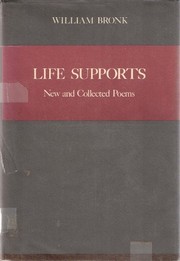
William Bronk stands as one of American poetry’s most intellectually rigorous yet understated voices, a writer whose work explores the slippery nature of perception, knowledge, and how we construct meaning from the world around us. His 1982 National Book Award for Life Supports: New and Collected Poems recognized a career-long commitment to philosophical inquiry rendered through carefully measured language and surprising formal innovation. Bronk’s poetry resists easy sentiment or decoration, instead offering readers precise meditations on reality’s fundamental uncertainties—how we see, how we know, and how fragile our understanding truly is.
What distinguishes Bronk’s approach is his refusal to separate the personal from the metaphysical. His poems don’t announce their ambitions loudly; rather, they accumulate meaning through patient observation and intellectual honesty, often turning on small moments of doubt or recognition that unfold with the inevitability of logical proof. The National Book Award acknowledged not just a single masterwork but the cumulative power of a body of work that had been quietly redefining what contemporary American poetry could accomplish—moving beyond confessional narratives or linguistic pyrotechnics to explore how language itself both reveals and obscures our relationship to existence. For readers willing to engage with his demanding, beautifully austere vision, Bronk offers something rare: poetry that takes thinking itself as its subject without ever sacrificing the music of human speech.