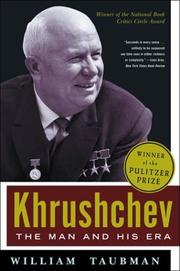
William Taubman
William Taubman has established himself as one of America’s premier political biographers through his meticulous research and narratively compelling approach to twentieth-century history. His magnum opus, Khrushchev: The Man and His Era, stands as a watershed achievement in Cold War scholarship—a work that earned the rare distinction of winning both the National Book Critics Circle Award in Biography and Autobiography categories in 2003, followed by the Pulitzer Prize for Biography in 2004. This unprecedented cross-category recognition speaks to Taubman’s ability to humanize historical figures without sacrificing analytical rigor, presenting Nikita Khrushchev not as a caricature of Soviet leadership but as a complex, often contradictory man navigating impossible political terrain.
The sweep of Taubman’s work reveals a scholar deeply invested in understanding power, personality, and the intersection of individual agency with historical forces. His extensive access to Russian archives and interviews with Khrushchev’s family and associates allowed him to produce a biography of extraordinary depth and nuance, one that reshaped Western understanding of the Soviet leader’s role during the Cuban Missile Crisis, the Hungarian uprising, and the Sino-Soviet split. Through Khrushchev, Taubman demonstrated that the most consequential political biography can also be genuinely intimate—a book that explores not just decisions made in the Kremlin but the man who made them, his fears and ambitions rendered as vividly as his historical significance.