William W. Warner
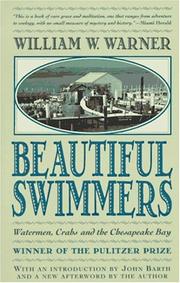
William W. Warner stands as a masterful practitioner of narrative nonfiction, a writer who brings the precision of a naturalist and the storytelling gifts of a novelist to subjects others might overlook. His 1977 Pulitzer Prize for General Nonfiction, awarded for Beautiful Swimmers, exemplifies his distinctive approach: taking what could be a purely scientific or regional subject—in this case, the blue crab fishery of the Chesapeake Bay—and transforming it into a deeply human narrative that examines ecology, livelihood, and tradition. Warner’s work demonstrates that compelling nonfiction doesn’t require distant historical dramas or famous figures; it requires the right writer asking the right questions of his subject and his readers.
Throughout his career, Warner has been drawn to the intersections of natural history and human society, writing with an eye for the overlooked details that reveal larger truths about how we live. Beautiful Swimmers, which spent years in research and fieldwork, remains his signature achievement—a book that manages to be simultaneously a celebration of Chesapeake Bay culture, a meditation on labor and sustainability, and a portrait of a vanishing way of life. The Pulitzer recognition affirmed what many readers already knew: that Warner possessed the rare ability to write about the natural world with both scientific credibility and genuine emotional resonance, making him one of the most respected voices in American nonfiction.