Elias Canetti
1981 Nobel Prize in Literature · Browse all books on Amazon ↗
Elias Canetti stands as one of the twentieth century’s most intellectually restless and polymathic writers, whose work defies easy categorization. Born in Bulgaria and shaped by a multilingual European upbringing, Canetti created a body of writing that synthesizes fiction, philosophy, aphorism, and autobiography into something uniquely his own. His 1981 Nobel Prize recognized not merely a novelist but a thinker whose influence extended far beyond literature into psychology, sociology, and cultural criticism. Canetti’s reputation rests on his ability to excavate the deepest currents of human consciousness and collective behavior, approaching his subjects with an almost anthropological intensity.
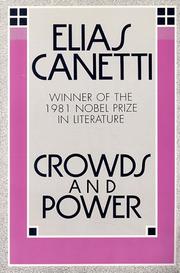
The distinctive power of Canetti’s work lies in his exploration of power dynamics, individual obsession, and the psychology of crowds. His masterwork, Auto-da-Fé, presents a scholar consumed by his vast library in ways that border on the visionary, while Crowds and Power emerged as his most influential non-fiction work, offering a penetrating analysis of how masses form and what draws individuals into collective hysteria. His aphoristic works, including The Human Province, reveal a mind constantly generating philosophical observations about human nature, often delivered with unsettling precision and dark wit. Canetti’s recurring preoccupation with the isolated individual pitched against social forces, and his skepticism about ideology and mass movements, gives his writing an almost prophetic quality regarding twentieth-century catastrophes.
Within world literature, Canetti represents the European intellectual tradition at its most cosmopolitan and uncompromising. Writing primarily in German despite his Sephardic Jewish heritage and multicultural background, he belonged to no school or movement yet influenced countless writers who came after him. His insistence on independence of thought, combined with his refusal to simplify either human psychology or social phenomena, secured his