Eugenio Montale
1975 Nobel Prize in Literature · Browse all books on Amazon ↗
Eugenio Montale stands as one of the towering figures of twentieth-century European poetry, a modernist master whose work fundamentally shaped Italian literature’s trajectory in the post-World War I era. Born in Genoa and rooted in the rocky Mediterranean landscape of his native Liguria, Montale crafted a distinctive poetic voice that rejected the ornamental rhetoric of his predecessors in favor of austere precision and intellectual rigor. His recognition with the Nobel Prize in Literature in 1975 affirmed his status as an essential voice in world literature, alongside contemporaries like T.S. Eliot and Ezra Pound.
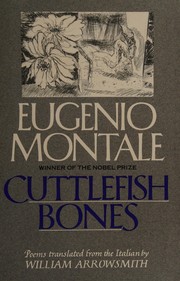
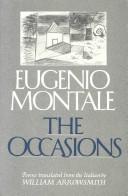
Montale’s style is characterized by spare, often fragmented language that mirrors the fractured consciousness of modern life. His early masterpiece Cuttlefish Bones established the core of his aesthetic: sparse imagery drawn from nature and the everyday world, philosophical meditation, and an almost scientific attention to detail. Throughout subsequent collections like The Occasions and The Storm and Other Poems, he explored themes of love, absence, memory, and the search for meaning in a world stripped of easy answers. His later work, including Satura, demonstrated an unflinching capacity to evolve, incorporating more colloquial language and dark humor even as his fundamental concerns remained constant.
What distinguishes Montale in the literary tradition is his synthesis of Italian lyric tradition with modernist innovation. He proved that difficulty and accessibility need not be enemies, creating poems of genuine emotional depth beneath their intellectual complexity. His influence reverberates through contemporary poetry, marking him as a writer who expanded what poetry could achieve in capturing the texture of modern experience.