Heinrich Böll
1972 Nobel Prize in Literature · Browse all books on Amazon ↗
Heinrich Böll stands as one of the most important German writers of the postwar era, earning the Nobel Prize in Literature in 1972 for his unflinching moral examination of modern society. His work emerged directly from the rubble of Nazi Germany and World War II, making him a crucial voice in Germany’s reckoning with its recent past. Böll’s reputation rests on his ability to blend intimate human stories with broader social and political critique, establishing himself as a writer of conscience during the Cold War who refused easy answers or comfortable silences.
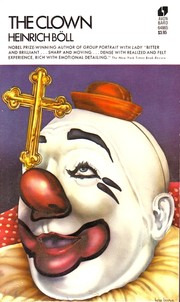
Böll’s distinctive style combines sharp observational realism with a deeply humanistic sensibility, often focusing on ordinary people caught within larger historical forces beyond their control. His novels frequently explore themes of alienation, the corrupting influence of materialism, and the tension between individual morality and institutional power. Works like Group Portrait with a Lady and The Clown demonstrate his skill at using fragmented narratives and unreliable perspectives to expose the contradictions between official narratives and lived experience. Throughout his career, Böll maintained a scrupulous attention to the ethical dimensions of everyday life—how people survive, maintain dignity, and preserve their humanity amid bureaucratic indifference and societal pressures.
Within the German literary tradition, Böll represents a humanistic counterpoint to both the experimentalism of his modernist predecessors and the political extremism that had devastated his nation. His accessible yet sophisticated prose made serious moral inquiry available to broad audiences, and his willingness to critique both German militarism and Cold War politics established him as a writer genuinely independent of ideology. This principled stance—combined with his compassionate portrayal of the vulnerable and displaced—secured his place as a towering figure in twentieth-century European literature.