Henri Bergson
1927 Nobel Prize in Literature · Browse all books on Amazon ↗
Henri Bergson stands as one of the most influential philosophers of the twentieth century, a thinker whose ideas fundamentally reshaped how we understand consciousness, time, and human creativity. His 1927 Nobel Prize in Literature—awarded to him “as a recognition of his rich and vitalizing ideas and the brilliant skill with which they have been expressed”—reflected the rare achievement of a philosopher whose work transcended academic circles to captivate the broader intellectual world. Bergson’s prose style, marked by clarity and elegance, made abstract philosophical concepts accessible without sacrificing their depth, earning him readers far beyond the academy and establishing him as a major voice in Western thought.
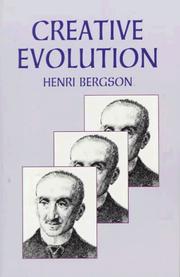
At the heart of Bergson’s philosophy lies a revolutionary reconception of time itself. Rather than viewing time as a series of static moments—as conventional physics and rational thought tend to do—he insisted that duration is a continuous, flowing reality, a lived experience fundamentally different from the abstract time of clocks. This insight powered his major works, including Time and Free Will, The Creative Evolution, and Matter and Memory, which together constitute a comprehensive challenge to mechanistic views of consciousness and nature. For Bergson, human beings are not simply machines responding to external stimuli but creative agents whose freedom and intuition constitute the very fabric of existence.
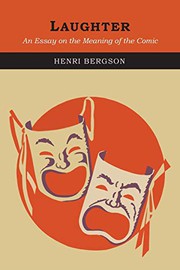
Bergson’s influence extended across art, literature, and science during his lifetime, shaping how modernist writers understood consciousness and temporality. His exploration of laughter in his slender essay on the comic, his meditations on memory and perception, and his vision of creative evolution as the driving force of life all contributed to a legacy that positioned him as a crucial bridge between nineteenth-century thought and contemporary philosophy. His conviction that intuition and creativity lie at the core of human experience left an indelible mark on twentieth-century intellectual culture.