Jean-Paul Sartre
1964 Nobel Prize in Literature · Browse all books on Amazon ↗
Jean-Paul Sartre stands as one of the twentieth century’s most influential and provocative intellectuals, a philosopher whose ideas penetrated far beyond academic circles to shape postwar culture itself. His 1964 Nobel Prize recognition acknowledged his towering significance not merely as a thinker but as a writer whose philosophical work was inseparable from his literary imagination. Sartre’s reputation rests on his development and popularization of existentialism, a philosophy emphasizing radical human freedom and responsibility, which he articulated across multiple genres—dense philosophical treatises, novels, plays, and essays—making complex ideas accessible to educated readers worldwide.
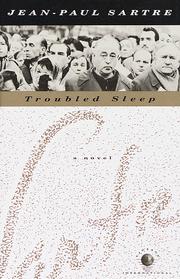
What makes Sartre’s work distinctive is the constant interplay between philosophical inquiry and creative expression. His novels like Nausea and the trilogy comprising The Age of Reason, The Reprieve, and Troubled Sleep embody existential themes through narrative rather than argument, exploring the nauseating contingency of existence and the anguish of freedom. His dramatic works, including No Exit, Dirty Hands, and The Flies, transformed philosophy into compelling theater, making existential dilemmas viscerally immediate. Meanwhile, monumental works like Being and Nothingness and Critique of Dialectical Reason constructed systematic philosophical architectures that engaged with phenomenology, Marxism, and human consciousness itself.
Throughout his career, Sartre remained obsessed with freedom, authenticity, and political engagement—the idea that writers and intellectuals bore moral responsibility to intervene in history. This commitment, combined with his restless intellectual ambition and stylistic virtuosity across forms, secured his place as a central figure in modern literature and thought, embodying the possibility that philosophy could be genuinely literary and literature genuinely philosophical.