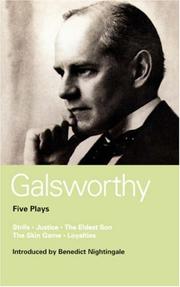
John Galsworthy
1932 Nobel Prize in Literature · Browse all books on Amazon ↗
John Galsworthy stands as one of the defining novelists of the Edwardian era and the early twentieth century, earning the Nobel Prize in Literature in 1932 for his distinguished artistic merits and the notable achievements of his literary output. His reputation rests primarily on his magnificent multi-generational family sagas, particularly The Forsyte Saga, which traces the rise, prosperity, and gradual decline of a wealthy English family across decades of social change. Through works like The Man of Property, In Chancery, and To Let, as well as the complementary sequence A Modern Comedy—comprising The White Monkey, The Silver Spoon, and Swan Song—Galsworthy created an unparalleled chronicle of English social life that captures both the intimate domestic tensions and the broader historical currents reshaping British society.
Galsworthy’s distinctive style combines meticulous social observation with a keen psychological insight into human nature. He was fundamentally a realist committed to exposing the contradictions and injustices lurking beneath the respectable surface of middle and upper-class life. His novels examine the tension between individual desire and social obligation, between traditional values and modernity, with a sympathy for those trapped by rigid conventions. Beyond his celebrated family narratives, he demonstrated remarkable range as a playwright and social critic, crafting compelling dramas like Strife, Justice, and Loyalties that explore moral ambiguity and social conflict, establishing him as a voice for progressive reform and human dignity.
Galsworthy’s place in world literature reflects his achievement as a supreme chronicler of a particular historical moment and his enduring influence on the development of the modern novel. His panoramic vision of English society, rendered with elegant prose and penetrating moral intelligence, established a template