Joseph Brodsky
1987 Nobel Prize in Literature · Browse all books on Amazon ↗
Joseph Brodsky stands as one of the most significant poets of the late twentieth century, a towering figure whose work bridges Russian literary tradition and Western modernism. Born in Leningrad and persecuted by the Soviet regime—he was exiled in 1972 for “parasitism”—Brodsky ultimately became an American citizen while maintaining his profound connection to Russian language and culture. His 1987 Nobel Prize recognition acknowledged not only his extraordinary poetic gifts but also his role as a moral voice against totalitarianism, making him a symbol of artistic resistance and intellectual freedom.
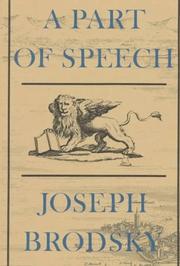
Brodsky’s distinctive voice combines formal rigor with emotional depth, often exploring themes of loss, exile, memory, and mortality through densely layered language and intricate metaphysical conceits. His poems demonstrate a masterful command of both traditional forms and modernist innovation, drawing inspiration from his beloved John Donne and the Russian formalist tradition while forging something entirely his own. Collections like A Part of Speech and To Urania showcase his ability to transmute personal suffering—the pain of displacement, love, and human fragility—into meditations of universal resonance.
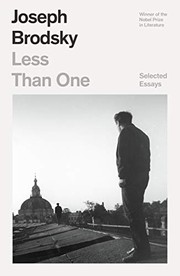
Beyond his poetry, Brodsky’s essays and prose works like Less Than One and On Grief and Reason reveal him as a profound literary critic and philosopher. His conviction that poetry offers spiritual and intellectual truths unavailable through other means shaped his legacy as both a craftsman of extraordinary precision and a thinker who refused to separate aesthetics from ethics. In world literature, he remains a crucial bridge between Russian and American literary cultures, and his insistence on the autonomy and necessity of art continues to influence writers everywhere.