Juan Ramón Jiménez
1956 Nobel Prize in Literature · Browse all books on Amazon ↗
Juan Ramón Jiménez stands as one of the most influential Spanish poets of the twentieth century, fundamentally reshaping the trajectory of Hispanic modernism and beyond. His 1956 Nobel Prize recognized not merely a body of work but an entire poetic philosophy that prioritized emotional precision and spiritual depth over conventional form. Throughout his career, Jiménez demonstrated an almost mystical commitment to refining language itself, constantly revising his own published poems in pursuit of what he termed “poetry in its pure state”—a concept that influenced generations of poets across the Spanish-speaking world and beyond.
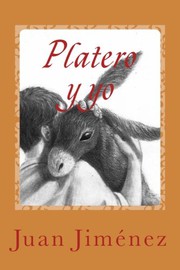
What distinguishes Jiménez’s work is his marriage of lyrical intimacy with philosophical inquiry. His collections ranging from Diario de un poeta reciencasado through Eternidades, Piedra y cielo, and the later Animal de fondo trace an evolving consciousness grappling with love, mortality, and the divine. This spiritual progression culminates in works like Dios deseado y deseante, where the poet explores the paradox of seeking and being sought by the divine. Even his most beloved work, Platero y yo—a deceptively simple meditation on a man and his donkey—reveals itself as a profound meditation on innocence, mortality, and our relationship with the natural world.
Jiménez’s legacy extends far beyond his native Spain. He represents a modernist sensibility that valued aesthetic refinement and introspection, influencing the Generation of 1927 and countless Latin American poets who followed. His insistence on the perfectibility of language and his exploration of the interplay between the material and spiritual realms positioned him as a bridge between nineteenth-century Romanticism and contemporary poetry, securing his place as a central figure in the Western literary canon.