Louise Glück
2020 Nobel Prize in Literature · Browse all books on Amazon ↗
Louise Glück stands as one of contemporary American literature’s most significant and uncompromising voices, a reputation cemented when she became the first American woman to win the Nobel Prize in Literature in 2020. Her recognition marked a watershed moment for poetry in the literary establishment, acknowledging not mere technical mastery but a profound philosophical depth that has distinguished her work across five decades. Glück’s influence extends far beyond academic circles; her unflinching examinations of the human condition have fundamentally shaped how we discuss vulnerability, mortality, and meaning in contemporary verse.
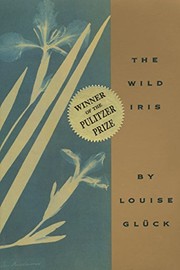
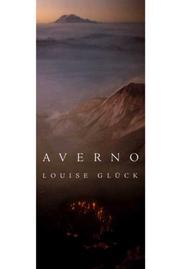
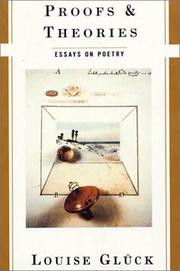
What makes Glück’s work so arresting is its austere clarity combined with psychological complexity. She employs a deceptively simple language to excavate the darker territories of human experience—shame, loss, family obligation, and the search for transcendence. Her poems often engage classical mythology and religious imagery not as ornament but as frameworks for understanding modern consciousness. Collections like The Wild Iris and Averno demonstrate her gift for transforming domestic and mythological settings into sites of spiritual inquiry, while her essays collected in Proofs and Theories reveal a mind equally attuned to the craft and philosophy of poetry itself.
Glück belongs to the tradition of American postconfessional poetry, yet she distinguishes herself through an almost austere refusal of sentiment or easy consolation. Her sparse, finely calibrated style creates the effect of overhearing something painfully honest—a quality that demands active engagement from readers. In world literature, she represents a distinctly American sensibility: skeptical, introspective, and committed to the proposition that rigorous artistic attention can illuminate the mysteries of being human.