Nelly Sachs
1966 Nobel Prize in Literature · Browse all books on Amazon ↗
Nelly Sachs stands as one of the most spiritually profound voices to emerge from the devastation of the Holocaust. A German-Jewish poet and playwright who escaped to Sweden in 1940, Sachs transformed unspeakable historical trauma into luminous, visionary literature that transcends the merely documentary. Her Nobel Prize recognition in 1966 acknowledged her as a major literary figure whose work reached beyond the Jewish experience to speak to universal human suffering and resilience. She remains a cornerstone of Holocaust literature, yet her significance extends far beyond this single tragedy—she is recognized as a poet of metaphysical depth whose work explores the boundaries between the material and spiritual worlds.
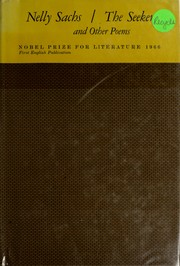
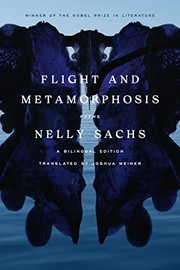
Sachs’s distinctive voice emerges through dense, imagistic poetry infused with mystical and kabbalistic traditions. Her works, including In the Habitations of Death, Flight and Metamorphosis, and The Seeker and Other Poems, employ symbolic language and dreamlike transformations to process collective grief and imagine spiritual transcendence. She also wrote for the stage, as demonstrated by the mystery play Eli, bringing her visionary sensibility to dramatic form. Characteristically, Sachs avoids explicit documentation in favor of alchemical imagery—dust, sand, light, and metamorphosis become vehicles for exploring loss, memory, and the possibility of renewal.
Writing in both German and Swedish, Sachs occupies a unique position in twentieth-century literature as a bridge figure between German-Jewish intellectual traditions and Nordic modernism. Her work has influenced generations of poets grappling with historical memory and spiritual transcendence, cementing her place among the essential voices of her era.