Peter Handke
2019 Nobel Prize in Literature · Browse all books on Amazon ↗
Peter Handke stands as one of the most innovative and philosophically rigorous voices in contemporary literature, recognized globally when he received the Nobel Prize in Literature in 2019 for his literary and linguistic creativity. An Austrian writer of extraordinary range, Handke has spent more than five decades challenging conventional narrative forms and exploring the phenomenological texture of everyday experience. His work defies easy categorization—he moves fluidly between fiction, drama, poetry, and philosophical essay, treating language itself as a fundamental subject worthy of obsessive examination.
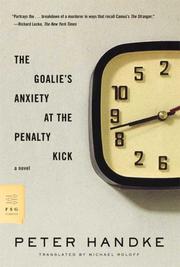
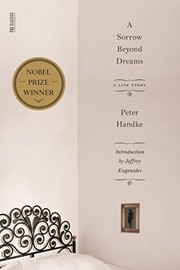
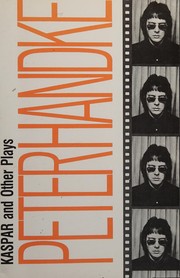
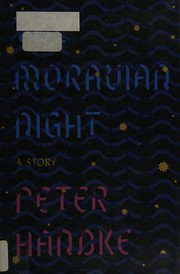
Handke’s literary signature lies in his meticulous attention to the minute details of perception, emotion, and consciousness. His early novel The Goalie’s Anxiety at the Penalty Kick established him as a writer fascinated by psychological states and the strange logic of human behavior, while works like A Sorrow Beyond Dreams, his devastating meditation on his mother’s suicide, demonstrate his capacity to transform personal trauma into universally resonant literature. Whether through the linguistic experiments of Kaspar, the philosophical meditations of Essay on Tiredness, or the sprawling consciousness of novels like The Moravian Night, Handke consistently returns to themes of solitude, observation, time, and the redemptive possibilities of language and attention. His style—precise, often spare, yet deeply poetic—insists that readers slow down and perceive the world anew.
Within world literature, Handke represents a distinctly Central European modernism that bridges the experimental traditions of the postwar avant-garde with phenomenological philosophy. His influence extends across multiple literary traditions and has shaped how contemporary writers approach the relationship between form and consciousness, making him not merely a significant author but a transformative presence in late twentieth and twenty-first century literature.