Saint-John Perse
1960 Nobel Prize in Literature · Browse all books on Amazon ↗
Saint-John Perse was a French poet and diplomat whose lyrical genius earned him the Nobel Prize in Literature in 1960 “for the soaring flight and the evocative power of his poetry.” Born Alexis Léger in Guadeloupe, Perse crafted a distinctive voice that transcended traditional poetic categories, blending modernist innovation with classical grandeur. His work represents a singular achievement in twentieth-century French letters—one that resists easy categorization yet commands admiration across linguistic and cultural boundaries.
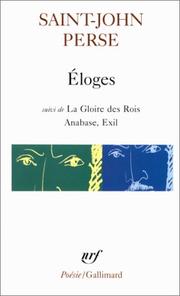
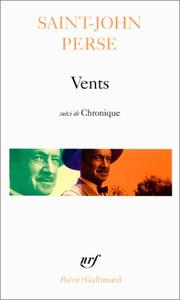
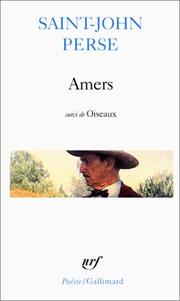
Perse’s style is immediately recognizable for its majestic, sweeping rhythms and elaborate imagery drawn from history, geography, and the natural world. His long sequences of free verse, particularly in works like Anabase and Amers, create an almost ceremonial atmosphere through accumulation and linguistic richness. Recurring themes in his oeuvre include journeys and voyages—both literal and metaphorical—the passage of time, human endeavor against vast natural forces, and the tension between civilization and the wild. Exil and Vents, written during and after his involuntary retirement from diplomatic service, explore displacement and renewal with haunting power.
Though often read within the French tradition, Perse’s influence extends globally, particularly among poets seeking alternatives to purely intimate or confessional modes. His work stands at a crossroads between Symbolism and high modernism, eschewing the experimental fragmentation of some contemporaries in favor of an expansive, almost Whitmanesque vision. His career—uniquely straddling the worlds of poetry and international diplomacy—gave his work an uncommon authority and range, making him one of the twentieth century’s most architecturally ambitious poets.