Shmuel Yosef Agnon
1966 Nobel Prize in Literature · Browse all books on Amazon ↗
Shmuel Yosef Agnon stands as one of the towering figures of modern Hebrew literature and the first writer in Hebrew to win the Nobel Prize in Literature. His 1966 Nobel honor recognized not only his literary craftsmanship but also his role in revitalizing Hebrew as a living literary language during a period of profound cultural and national transformation. Agnon’s body of work spans decades and encompasses novels, short stories, and collections that have secured his position as a foundational voice in twentieth-century world literature.
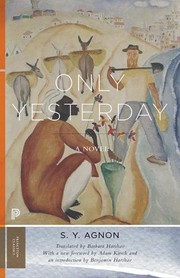
Agnon’s distinctive style weaves together the textures of traditional Jewish sources—biblical language, Talmudic discourse, and rabbinic storytelling—with modernist narrative techniques and psychological depth. His recurring preoccupations center on Jewish identity, memory, displacement, and the tension between tradition and modernity. Whether depicting European Jewish life before catastrophe in works like A Guest for the Night and Only Yesterday, or exploring metaphysical and mythic dimensions in novels such as The Bridal Canopy and In the Heart of the Seas, Agnon brings an almost hallucinatory intensity to questions of faith, desire, and belonging that resonates far beyond the Jewish community.
What distinguishes Agnon’s place in world literature is his ability to make the particular universal—to render the intricate specificities of Jewish experience and consciousness in language of such precision and power that readers across cultures find themselves reflected in his pages. His influence on subsequent Hebrew and world literature remains profound, establishing him as a bridge between Jewish literary tradition and global modernism.