Vicente Aleixandre
1977 Nobel Prize in Literature · Browse all books on Amazon ↗
Vicente Aleixandre stands as one of the towering figures of twentieth-century Spanish poetry and a vital bridge between the avant-garde experiments of early modernism and the deeply humanistic concerns of mid-century verse. His 1977 Nobel Prize in Literature recognized not only the technical brilliance of his work but also his moral authority as a poet who maintained his artistic integrity through Spain’s turbulent decades of civil war and dictatorship. Aleixandre’s reputation rests on his ability to transform surrealist techniques into vehicles for exploring the most fundamental human experiences—love, mortality, and our connection to the natural world.
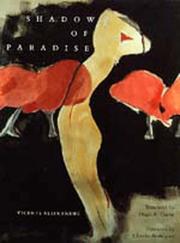
At the heart of Aleixandre’s distinctive voice lies a paradox: he married surrealist imagery and dreamlike associative logic with an almost classical clarity of purpose. Works like Shadow of Paradise and Passion of the Earth showcase his gift for conjuring hallucinatory landscapes that ultimately reveal truths about human desire and cosmic unity. His recurring preoccupations—the erotic as a force of spiritual transcendence, the tension between individual isolation and universal belonging, the redemptive power of love—give his poetry an emotional intensity that transcends aesthetic fashion.
Aleixandre occupies a singular place in world literature as a Spanish poet whose influence extended far beyond the Iberian peninsula, helping shape how subsequent generations understood the possibilities of lyric poetry itself. His work demonstrated that surrealism need not be merely playful or detached; it could be a language for expressing the deepest longings of the human soul, making him essential reading for anyone seeking to understand twentieth-century poetry’s evolution from formal experiment toward existential urgency.